


What is continuous improvement?
Continuous improvement is a structured, cyclical approach to making processes, products and services better step by step. Instead of waiting for big innovations, continuous improvement focuses on small, incremental adjustments that add up to big results. This principle is essential in lean manufacturing and is used worldwide in top companies such as Toyota, the founder of many lean principles.
The continuous improvement method is all about employee involvement at every level. The aim is to identify, analyse and solve inefficiencies. By addressing problems structurally and securing solutions, an organisation grows in quality, speed and customer satisfaction.
Continuous improvement and lean: a powerful combination
Within lean manufacturing, continuous improvement is a core principle. Lean focuses on eliminating waste (muda) and creating maximum value for the customer. Wastes such as overproduction, waiting times, errors, excess stock and unnecessary movements are scrutinised and eliminated.
Here, the continuous improvement method is the tool used to put lean ideas into practice. By constantly making small improvements, organisations can improve their
Kaizen: the essence of continuous improvement
One of the best-known approaches within continuous improvement is Kaizen. This Japanese word literally means "change for the better" and forms the basis of the continuous improvement culture in many lean organisations. Kaizen encourages employees to continuously think about how their work can be done better, more efficiently and more customer-focused.
Kaizen teams analyse processes and implement improvements, often with simple adjustments. Think, for example, of rearranging a workplace using workbenches or solving problems faster by using andon.
The 5S method: order creates room for improvement
The 5S method is a practical way of creating an organised and efficient workplace, an essential step within continuous improvement. The five S's stand for:
- Seiri (Sort): Remove what is not needed.
- Seiton (Arrange): Organise needed items logically.
- Seiso (Cleaning): Keep everything clean and tidy.
- Seiketsu (Standardise): Create standard procedures.
- Shitsuke (Maintain): Ensure discipline and continuity.
Applying the 5S method creates a workplace that is orderly, safe and efficient, a foundation for continuous improvement. For example, flow racks and adjustable work tables are tools that fit perfectly within this system by providing overview and ergonomics.
Just in Time (JIT) and continuous improvement
Another important pillar within lean and continuous improvement is the Just in Time (JIT) principle. JIT aims to deliver the right quantity at exactly the right time. This minimises stocks and increases flexibility. But JIT requires stable, reliable processes - and that's where continuous improvement comes in.
Only by making continuous improvements in, for instance, delivery reliability, production planning and cooperation with suppliers, can JIT be applied successfully. FIFO and LIFO systems also play an important role here, as they ensure the right order in inventory management.
Kanban: visual control for improved flow
Kanban is a visual system that helps manage workflows and inventory. The system is simple but highly effective. Maps or digital boards are used to visualise which work is at which stage. This makes bottlenecks quickly visible, allowing for targeted improvements.
Within continuous improvement, Kanban is a powerful tool. It makes it possible to identify waste such as overproduction or waiting times. Combined with tools such as andon, order pick carts or flow racks, the work flow can be optimally tuned to demand.
FIFO and LIFO: stock management and continuous improvement
Inventory management is an important aspect of any organisation. Two well-known methods are FIFO (First In, First Out) and LIFO (Last In, First Out). Within the context of continuous improvement, FIFO is often preferred because it helps prevent obsolete or spoilt products.
Setting up processes so that FIFO is followed automatically - e.g. via kanban counts - ensures consistency and quality. At the same time, LIFO remains relevant in some situations, such as non-perishable products or where price volatility is an issue.
Tools for continuous improvement: from work tables to carts
The physical workplace plays a crucial role in the success of continuous improvement. Smart tools can help increase efficiency, reduce errors and improve ergonomics. Some examples:
Adjustable work tables
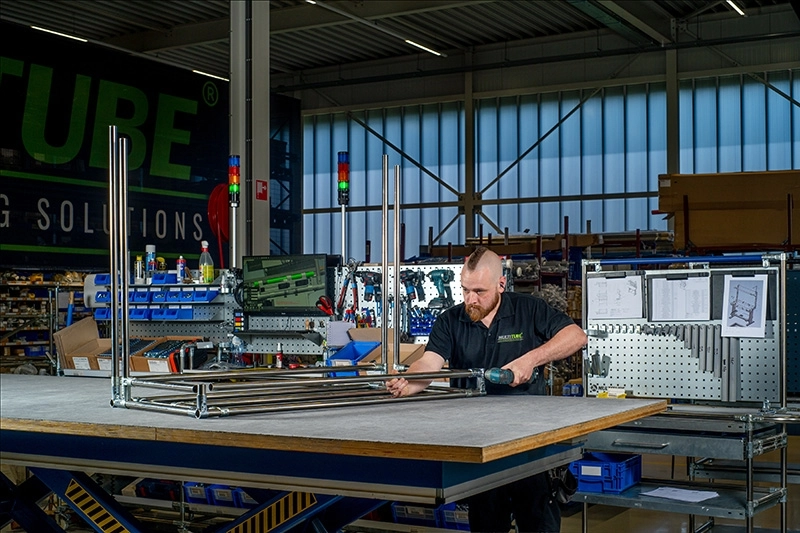
Adjustable workbenches ensure an ergonomic working posture, leading to fewer physical complaints and higher productivity. Within the framework of continuous improvement, these tables contribute to a safe and efficient workplace, tailored to the individual employee. This promotes standardisation and prevents waste due to interruptions or adjustments during the work process.
Flow racks
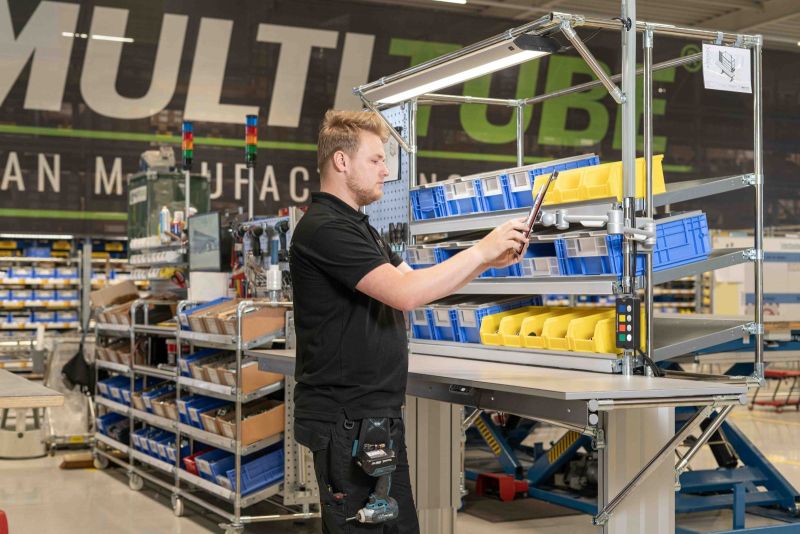
Flow racks support FIFO and ensure an orderly flow of materials. They make it possible to process products automatically in the right order, preventing waste and errors. In the context of continuous improvement, flow racks contribute to a visual and structured work environment, where deviations are immediately noticeable.

Picking trolleys
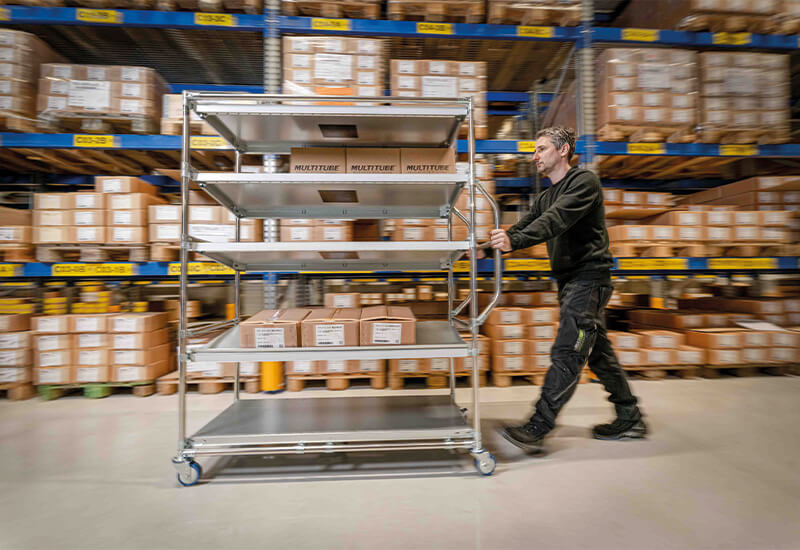
Picking trolleys support a visual and flexible approach within the order-picking process. This helps to quickly identify deviations and immediately implement improvements according to the continuous improvement method. They thus contribute to a more efficient workflow and fewer errors in the logistics process.
By deploying these tools strategically within the continuous improvement method, organisations can quickly make steps towards a lean working environment.
Culture of continuous improvement
The biggest challenge in continuous improvement is not finding the right tools or methods, it is creating a culture in which improvement comes naturally. Employees must be encouraged to think actively, take initiative and see mistakes as learning opportunities.
This requires leadership, commitment and transparency. Lean production therefore goes beyond process optimisation; it is a philosophy that must be supported by the entire organisation.
The benefits of continuous improvement
Continuous improvement not only delivers short-term results, but also ensures sustainable growth. Organisations that embrace the continuous improvement method achieve numerous benefits:
- Higher quality: Fewer errors and more consistent processes.
- Increased customer satisfaction: Faster delivery times and better products.
- Lower costs: Less waste and more efficient use of resources.
- Engaged employees: Increased ownership and motivation on the shop floor.
- Competitive advantage: Flexible, agile organisation that can respond faster to changes.
Implementing continuous improvement: a step-by-step plan
Want to get started with continuous improvement? Then follow these steps:
- Start with awareness: Explain what continuous improvement is and why it is important.
- Perform a baseline measurement: Analyse current processes.
- Set clear goals: For example: fewer errors, shorter lead times.
- Train employees: For example, in the 5S method, Kaizen, or using Kanban.
- Implement tools: Think adjustable work tables, flow racks, and so on.
- Measure results: Use KPIs and dashboards.
- Secure improvements: Make sure successes are recorded and repeated.
Conclusion: Continuous improvement is never finished
Continuous improvement is not a one-off project, but an ongoing process. It requires dedication, discipline and long-term commitment. By using methods such as Kaizen, the 5S method, Kanban, and systems like Just in Time, FIFO and LIFO, organisations build step by step a robust, agile and customer-focused company.
Because in the end, continuous improvement is nothing but getting a little better together every day.